Where Do Flamingos Live and Where Can You See Them?
Flamingos are wild, highly social birds with specialized habitat and feeding needs. To see them responsibly, visit wetlands where natural food and suitable water conditions support established populations.
Flamingos live in parts of Africa, Asia, Europe, the Caribbean, and the Americas. Their habitats include saline and alkaline lakes, lagoons, estuaries, mudflats, and other shallow wetlands rich in suitable food.
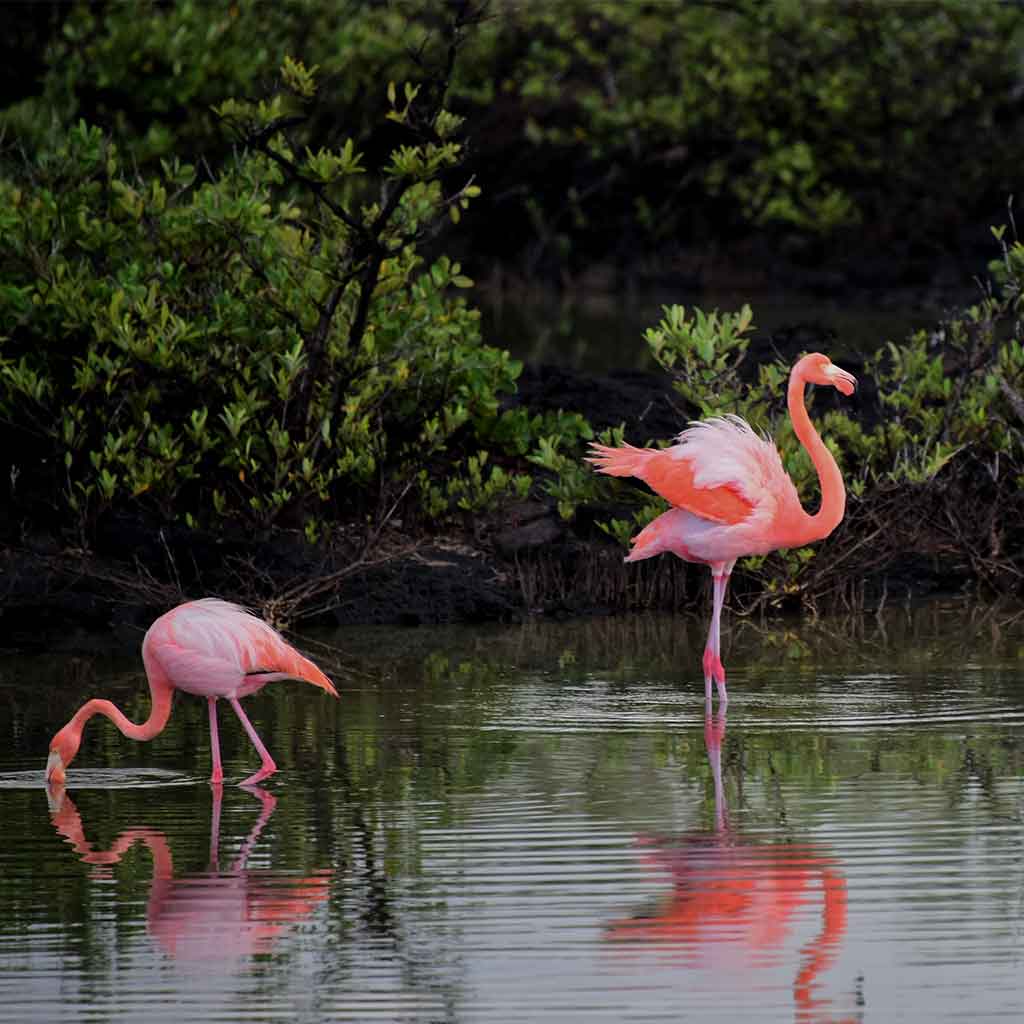
Flamingos love tropical and subtropical environments. They enjoy spending their time in shallow lakes, swamps, sandy islands, and mangrove. These birds live in specific places only because of their diet, so they populate regions with wet habitats from fresh to saltwater. But, what is interesting is that these majestic birds are easily adaptable.
Where to See Wild Flamingos?
Yes, we can visit a Zoo and see specific flamingos that live in captivity. But, that is not the same as when observing these magnificent birds in the wild, in their natural habitat. All we need is to know, is where to look.
What Kind of Habitat do Flamingos Enjoy?
There are six living flamingo species, each adapted to particular environments and climates. Flamingos favor warm, watery regions and shallow coastal or inland wetlands such as lakes, lagoons, mangrove swamps, mudflats, and small islands. As highly social birds, they live in flocks or colonies. Some species inhabit parts of Asia, while others live in South America. Here is where each flamingo species can be found.
American Flamingo Habitat
American Flamingo, is also known as Caribbean Flamingo, Greater Flamingo, and Fillymingo.
Habitat-Almost all the places where you can see brackish or saline water, you might be almost sure you will spot American flamingos. They can be found in shallow ponds, lakes, mudflats, lagoons. Range: The American flamingo lives in Central America, South America, and the Caribbean. It can be seen in the Bahamas, Cuba, and along Mexico’s Caribbean coast, including the Yucatán Peninsula. It also occurs along the northern coast of South America as far as Brazil, and a population lives in the Galápagos Islands.
These birds are occasionally reported in Texas and Florida. Flamingos seen along the Texas coast may come from colonies on Mexico’s Yucatán Peninsula, although it is not always clear whether individual birds are wild or have escaped from captivity. This uncertainty is one reason they are not generally counted as established residents of these regions. The American flamingo is the only flamingo species naturally found in North America.
The James or Puna Flamingo Habitat
Unlike other flamingo species, James flamingos have the most restricted range. They are one of three species of South American flamingo and other two being the Chilean Flamingo and the Andean Flamingo. It can be found in flocks of the Andean and Chilean flamingos, and often found nesting and migrating together. They can be found in Peru, northeastern Chile, western Bolivia, and northwestern Argentina.
Habitat-The James Flamingos inhabit the salt lakes and lagoons of the Andes mountains at altitudes over 3000 m (9,900 ft). They feed on algae, plankton, and diatoms. Range: James’s flamingos live in high-Andean wetlands in Peru, Bolivia, Chile, and Argentina. Some move to lower-elevation wetlands during winter. The former claim that they migrate to Florida was removed because Florida lies far outside the species’ accepted natural range.
The Chilean Flamingo Habitat
Habitat-The Chilean flamingos enjoy lowlands aquatic environments, and they inhabit alkaline or brackish shallow muddy lakes. They live in warm, tropical climates. Although they are living at the sea level, they can easily be spotted at the altitudes of 4,500 m (14,769 ft). Their diet includes algae, diatoms, and aquatic invertebrates. Range: Chilean flamingos are native to western and southern South America, including Peru, Argentina, Paraguay, Bolivia, Chile, and southern Brazil. They also occur in Patagonia. Far from tropical regions, Chilean flamingos regularly visit numerous lakes in the Chacabuco Valley, where they spend the Southern Hemisphere’s spring and summer months, from October through March.
A high population of flamingos feeds at a shallow lake called Laguna Seca. Laguna Seca is only 10 km east of the main park headquarters on the main international road.
Greater Flamingo Habitat
Greater Flamingo is the only tall, pink birds and one of most widespread flamingo distribution.
Habitat-These particular species like warm, watery regions and they can be found on many continents. They enjoy saline, alkaline or estuaries lakes. Range-The Greater Flamingo lives in southern Europe, Africa, and South-East Asia. Some also live in parts of America and the Caribbean.
Lesser Flamingo Habitat
The lesser flamingo is the smallest and most numerous flamingo species. Its population is spread mainly across sub-Saharan Africa, with smaller populations in India and nearby parts of South Asia. Estimates change as surveys improve and should always be presented with a source and date.
Habitat-Lesser’s flamingo enjoys tropical alkaline and saline lakes. Their diet includes blue, green algae, small insects, diatoms, and other crustaceans. Range-Lesser flamingos reside in eastern and southern Africa and a smaller population in western Africa and Pakistan.
The lesser flamingo is primarily an African species. They can be found in eastern, southwestern, and western Africa (mainly in Great Rift Valey), and North West India.
Andean Flamingo
The Andean flamingos are one of the rarest flamingos in the world. They are one of the three flamingos living in the high Andes of South America, but they are the largest of the Andean flamingos and easiest to identify.
Habitat: Andean flamingos use shallow saline and alkaline lakes, particularly high-Andean wetlands about 2,300–4,500 metres above sea level. Their movements respond to changing water, food, weather, and breeding conditions. The IUCN classifies the species as Vulnerable, not Endangered. Range-The Andean flamingo lives in the Andes mountains of South America. You can easily spot them from southern parts of Peru to the northwest of Argentina and northern Chile and Bolivia. In winter they live in salt lakes and migrate to the lower wetlands.
Where Do Flamingos Live in Florida?
Flocks of flamingos used the migrate from the Bahamas to Florida Bay regularly, up until 1900. Today, this spot is known as Everglades National Park. Some of these are believed to be wanderers from the Bahamian colonies.
Beaches Where You Can See Flamingos
The Caribbean, a Birder’s Paradise The American flamingo occurs on many islands in the Caribbean. On the island of Great Inagua, Aruba, and Cuba, in the Bahamas, you will be astounded with a sight of graciously looking flamingos.
Back in the early 1950s, ornithologist Robert Porter Allen, arrived in the Bahama’s to discover only a small amount of flamingos, a hundred or so. They were the last breeding colonies of American Flamingo. Thanks to the effort of Allen and others, after the Bahamian government, preserved roughly half of the Great Inagua, as a national park, today the island’s flamingo population is around 80,000.
The Bahamas – In the Bahamas, you can find hundreds of flamingos all located in Inagua National Park, in the shallow waters of Lake Rosa. Inagua is the southernmost island in The Bahamas and consists of two separate islands, Great Inagua Island and Little Inagua Island. Both are known for their natural surroundings and act as great destinations for ecotourists. Great Inagua is the third largest island in the Bahamas. Only about 800 people live here, and you will not spot luxury hotels nor casinos, mainly flamingos.
South America – The Andean, Chilean and American Flamingos- You can find specific flamingo species in South America in a variety of habitats. For example, a favorite spot to see flamingos is in Laguna Colorada in Bolivia. From coastal marshes to mountain plateaus flamingos can be found in Argentina, throughout Ecuador, Venezuela, and northeastern Chile.
Africa – Lesser and Greater Flamingos – The most common breeding areas are the Great Rift Valley, including Late Natron in Tanzania, Lake Bogoria National Park in Kenya and Lake Nakuru, also in Kenya.
The Middle East – Great and Lesser Flamingos – After the breeding period is over, greater and lesser flamingos migrate to the Middle East. They can be seen in Saudi Arabia, Pakistan, Qatar, and Turkey. Also, they can be still found in Kazakhstan and Iran, although their population seems to be decreasing in those areas.
The Mediterranean – Greater flamingos – From Tunisia and Egypt, and all along the southern Mediterranean sea, greater flamingos can be spotted.
Based on the flamingo species you are interested, there are specific birding tours available, or if you are up to an adventure, you can arrange your vacation in flamingo-friendly areas.
Flamingos in Captivity
If you are not able to travel, or you are on a budget, but you still want to see these beautiful birds, you can always find flamingos in Zoos, Marine animal parks, Botanical gardens, Flamingo Las Vegas or Aviaries.
And while you are heating towards these places, do not be surprised to see flamingos in the wild. Many will regularly escape, and they can be seen in the wild.
Seeing wild flamingos requires choosing the right habitat and season, and sightings are never guaranteed. Florida is part of the American flamingo’s historical range, and wild birds are again being recorded there, but they remain uncommon. More dependable destinations include protected wetlands in the Caribbean, South America, Africa, southern Europe, and parts of Asia.